I remember the first time my Labrador, Milo, jumped on a visitor. The guest laughed, but a toddler nearby could have been hurt. This moment made me look for ways to stop it. I want to share what I learned so others can avoid this worry.
This article offers simple, expert-backed tips on dog training jumping. I aim to teach you how to stop your dog from jumping. We'll cover training methods, management tools, and consistent reinforcement for real-life solutions.
Jumping is common and often caused by excitement and a need for attention. It can be harmless but also dangerous. Children and seniors are especially at risk, making safe training techniques crucial.
In this guide, we'll explore key strategies. We'll teach your dog to do something else instead of jumping. We'll also discuss using rewards, ignoring bad behavior, and managing situations. Plus, we'll talk about drills to improve reliability and when to seek professional help.
Key Takeaways
- Jumping is usually attention-driven and common, but safety is a concern for kids and seniors.
- Teach incompatible behaviors—four on the floor or sit—to replace jumping.
- Use reward-and-ignore and consistent timing to speed learning.
- Manage the environment with crates, gates, or leashes to prevent practice.
- Seek help from certified trainers or the AKC GoodDog! Helpline when needed.
Why Dogs Jump: Understanding the Motivation Behind Greeting Jumps
I see jumping as a mix of emotion and learned habit. When a dog greets someone, it's driven by a need for attention and excitement. Over time, the dog learns that jumping gets humans to respond, making it a learned behavior.
Attention, excitement, and learned rewards
Dogs jump because you react. A pet, a shove, a laugh, or a scolding still gives attention. This response becomes the reward. To change this, I stop rewarding the jump and teach a better option instead.
How jumping is a natural canine greeting and why that matters
Jumping is rooted in normal canine social signals. Dogs seek face-to-face contact to sniff and inspect. Recognizing this makes training kinder and clearer. I use methods that respect the dog's instinct while guiding new habits like four paws on the floor.
Risks of allowing jumping: injuries, dirty clothes, and safety for kids and seniors
Allowing jumping carries real risks. Muddy paws and torn shirts are common annoyances. More serious outcomes include scratches, bruises, and the danger of knocking down a child, an elderly person, or someone with mobility issues.
To reduce those risks, I focus on practical dog jumping solutions. I remove the reward for jumping up. Teaching alternatives and being consistent prevents rehearsal of the unwanted behavior. This approach answers questions about how to train a dog not to jump without relying on force.
dog training jumping
I see jumping as a problem when it's dangerous, messes things up, or leads to nipping. It's unwanted when it disrupts family life or safety. My goal is to help you know when it's time to change.
Defining the problem: when jumping becomes unwanted behavior
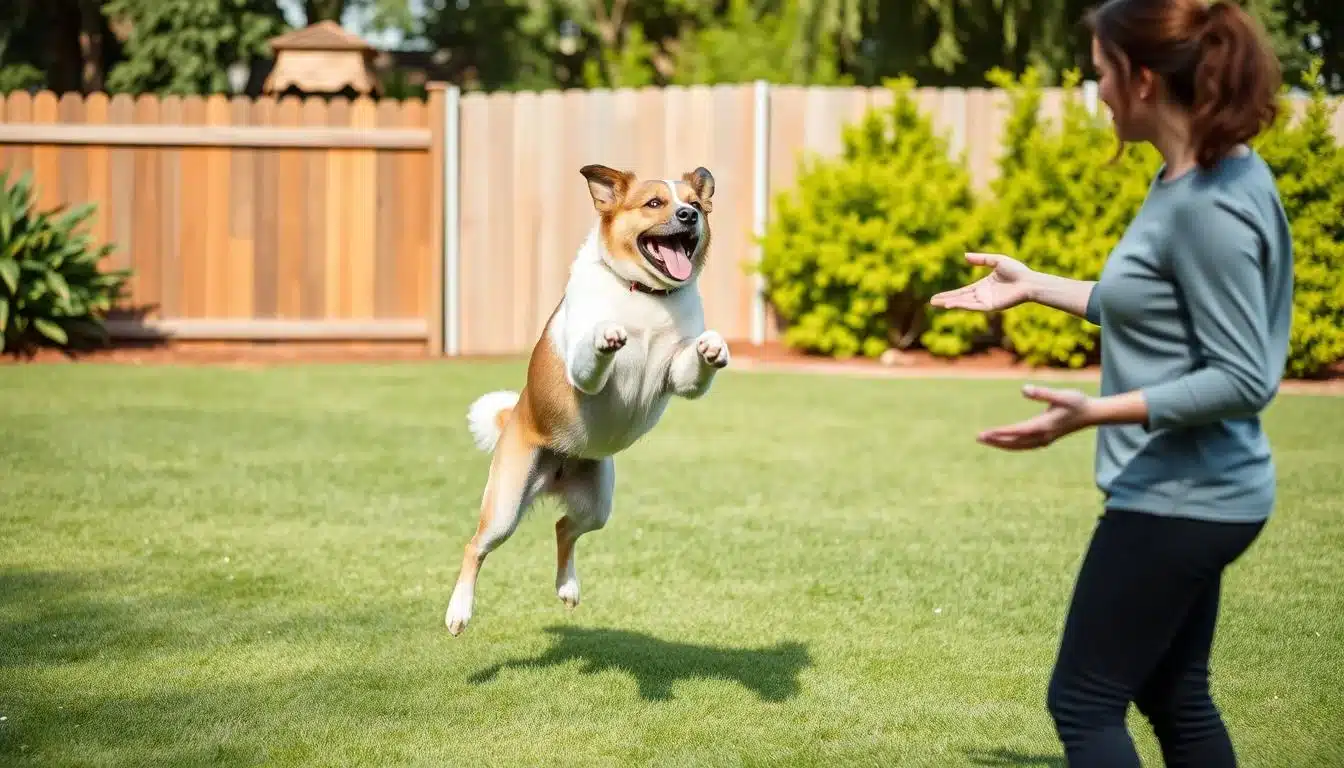
Jumping is a problem if it hurts someone, scares a child, or ruins your clothes. It's serious if the dog nips while jumping. In these cases, you need a solid plan to stop it.
Some dogs jump for attention, others from excitement or habit. When they jump on counters or guests, it gets worse. I look for what triggers it so I can train them right.
How consistency and timing affect learning
The AKC GoodDog! Helpline teaches that behavior changes with consequences. Rewarding a calm dog right away helps them learn.
Give praise or pets the moment their paws touch the floor. Waiting too long can confuse them. When they jump, stop paying attention right away. This timing is crucial for learning.
Everyone in the house must follow the same rules. Mixed signals slow down learning. Make sure guests and neighbors know the rules too, so the dog knows what to expect.
When to call a professional trainer or helpline
If jumping doesn't stop after trying, it's time to get help. Call the AKC GoodDog! Helpline or find a certified trainer for advice. They'll create a plan and teach you how to reward and correct behavior.
If the dog shows fear, growls, or is aggressive, get help fast. Also, if they nip a lot while jumping, you need a behaviorist.
With the right timing, consistent rules, and expert help, you can stop dog jumping. I focus on training to make greetings calm and safe again.
Teach an Alternative: Four on the Floor and Sit for Greetings
I teach dogs what to do instead of just saying no to jumping. I use two clear behaviors: four on the floor and a polite sit. These behaviors give the dog a job and a predictable path to success when guests arrive or furniture is tempting.
Why incompatible behaviors work better than "don't jump": a command like sit or four on the floor replaces an urge with action. The dog learns that greeting equals staying grounded. This approach speeds learning and reduces frustration for owners.
Four on the floor — treat method
- Start with the dog on leash and a helper approaching the door.
- Toss quick treats to the floor so the dog must keep paws down to eat.
- While the dog eats, have the helper calmly greet and pet them.
- Repeat, then delay the first treat until the dog already has four paws down.
- Phase out treats until attention and calm are enough; if the dog jumps, stop feeding and have the helper turn away.
Sit for greetings — tether and approach
- Tether the dog safely to a post or stable furniture a few feet from the door.
- From that distance, ask for a sit; if the dog rises, step back and reset.
- If the dog stays seated, calmly approach and reward with quiet praise and a gentle pet.
- Increase approach motion and practice with friends so sit becomes the habitual "please" cue before outings or meals.
- Use consistent timing, patience, and gradually add distractions to generalize the behavior for dog training jumping on visitors and dog training jumping on furniture situations.
I keep sessions short and frequent to avoid over-arousal. I emphasize speed and anticipation when tossing rewards so I'm always faster than the dog's instinct to jump. When a jump happens, I remove attention immediately and reset the exercise.
| Technique | Best Use | Key Steps | Progression |
|---|---|---|---|
| Four on the Floor | Greeting at door, visitors, family returns | Leash, toss floor treats, helper greets, delay treat, fade rewards | Short sessions → longer greetings → praise only |
| Sit for Greetings | Controlled approaches, busy households, pre-meal calm | Tether, ask sit, step back if standing, reward calm approach | Practice with friends → add distance and distractions → habitual cue |
| Combined Plan | Stops jumping at furniture and visitors | Alternate drills, reward calm, ignore jumps, consistent family rules | Daily repetition → real-world practice → maintenance |
Reward and Ignore Strategy: Reinforce Good Behavior, Remove Attention for Jumps
I teach a clear reward-and-ignore core to stop unwanted greetings. Reward the behavior you want the instant your dog’s front paws hit the floor. This way, the dog learns to associate calm greetings with praise, treats, or a scratch behind the ear.
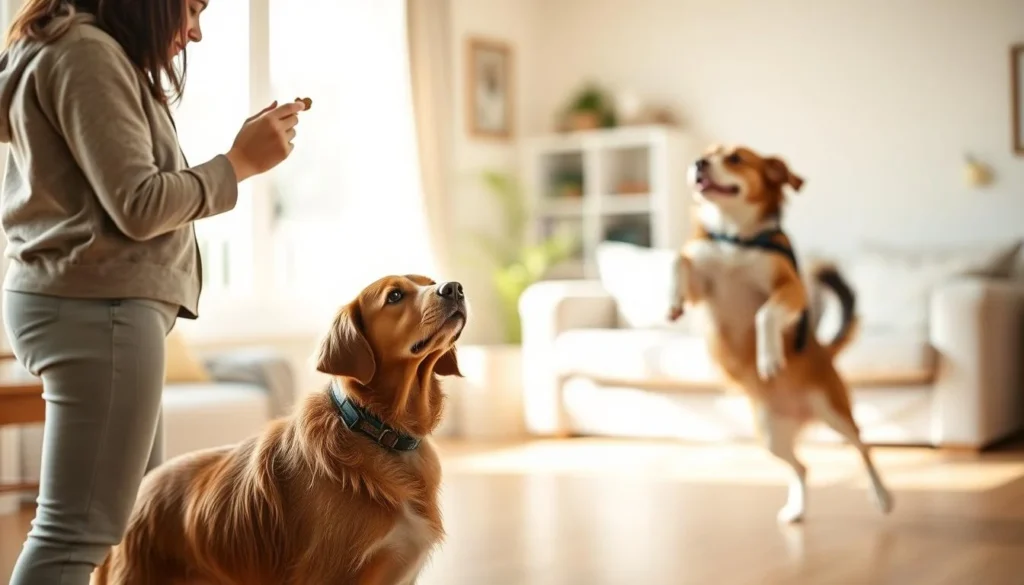
I rely on quick, small rewards from the AKC GoodDog! Helpline approach. Give attention the moment four paws are down. Delays make the lesson fuzzy and slow progress. This method speeds up learning for dog training jumping and dog training jumping up problems.
I use these practical steps when guests arrive:
- Turn your back and avoid eye contact while the dog is up.
- Step out of the room or calmly walk away until the dog is calm.
- Return only when all four paws are on the floor and then reward immediately.
On walks and at the door, I have visitors step away if the dog leaps. This removes the attention dogs seek and supports real dog jumping solutions. The greeter’s consistency matters more than force.
Timing is strict. Reward while the dog still shows the desired behavior. If the dog has been jumping, withhold petting and praise until four paws are down. This clear cut rule helps with dog training jumping on visitors and keeps criteria simple for everyone in the home.
Physical corrections like pushing, kneeing, or grabbing do not work for me. They still deliver attention and can look like play or cause fear. Those reactions often increase jumping or damage trust, which hurts recalls and family safety.
| Action | What I Do | Why It Works |
|---|---|---|
| Immediate praise | Reward the instant four paws touch the floor | Creates a clear link between calm behavior and reward |
| Ignore the jump | Turn away, step out, or have guest leave the area | Removes the attention reward that triggers jumping |
| Delay rewards after jumping | No petting or treats until paws are down | Prevents accidental reinforcement of bad behavior |
| Physical correction | No pushing, kneeing, or grabbing | Reduces risk of fear, increased arousal, and broken bond |
Management Techniques to Prevent Practice of Jumping
I focus on management to teach new greeting habits. Stopping the unwanted behavior helps training move faster. Simple barriers and routines help make training more reliable.
I use crates and closed rooms when guests arrive. Putting the dog in a crate or a separate room stops jumping. This is done until the dog greets calmly.
Baby gates block the entryway while letting the dog see visitors. A gate reduces the chance of jumping. The dog learns to watch without rushing.
I keep a leash on the dog at the doorway or tether them to a secure object during arrivals. This gives me control to teach a sit or four-on-the-floor. Leashing stops the dog from rushing to the door.
I fill the space with treats and toys near the entry. Tossing a treat away from the door keeps the dog busy. Offering a favorite toy before visitors enter helps calm the dog.
When expecting a high-energy greeting, I make arrivals calm. I ask guests to stay quiet and avoid eye contact until the dog is calm. This makes it easier to prevent jumping.
I plan for specific obstacles. For dog training jumping obstacles like gates and leashes, I set up practice sessions. This teaches the dog that barriers mean calm behavior. For dog training jumping on visitors, I rehearse door arrivals with family until responses are reliable.
I also manage counter and furniture access. Using confinement and supervised time reduces opportunities for jumping. Preventing practice on surfaces and people helps shape the behavior I want.
| Management Tool | Primary Benefit | How I Use It |
|---|---|---|
| Crate or separate room | Prevents rehearsal of jumping | Place dog before guests arrive; release after calm behavior |
| Baby gate | Physical boundary with visual contact | Block entryway while allowing the dog to see visitors without access |
| Leash / tether | Immediate control at the door | Attach at arrival to prompt sits and prevent lunges |
| Treats and toys pre-loading | Distracts and rewards correct behavior | Toss treats away from door; reward calm greeting behavior |
| Low-key greeting rules | Reduces arousal and chance of rehearsal | Ask guests to be quiet, avoid eye contact, and reward calm |
Training for Specific Contexts: Visitors, Walks, Counters and Furniture
I help owners with steps that fit real life. Training for guests, walks, and home means teaching a few cues and simple management. I focus on small wins you can do every day to teach your dog what you expect.
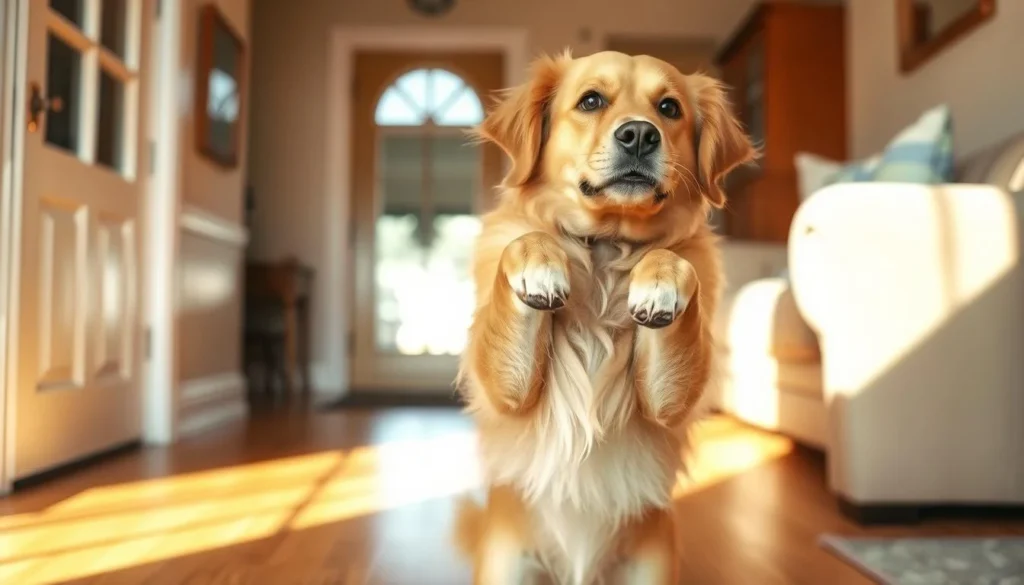
Prevent jumping on visitors
I tell guests to ignore the dog until you say it's okay to pet. They should keep hands low and only touch when the dog is calm or sitting.
I use a crate, leash, or baby gate before guests arrive to help the dog succeed. A helper can practice approach drills while the dog is leashed. This teaches guests to step back if the dog stands.
Managing jumps on walks
I avoid unstructured greetings with strangers until the dog is focused. I teach a strong attention cue like “watch me” and carry treats for calm focus.
I tell friendly strangers to ignore the dog unless it's sitting calmly. This keeps expectations clear and helps the dog learn faster on walks.
Addressing jumping on counters and furniture
I keep food out of reach and use gates or closed doors to block counters. For furniture, I give an approved alternative like a dog bed and reward its use.
I teach clear cues: “off” for counters and “down” for furniture, then reward the right choice. If furniture is off-limits, everyone must follow the same rule to avoid confusing the dog.
| Context | Management | Training Cue | Goal |
|---|---|---|---|
| Visitors | Crate or leash at door; ask guests to ignore | Sit or four-on-floor | Polite greetings with no jumping |
| Walks | Avoid loose stranger greetings; carry treats | Watch me / sit | Calm focus and no sudden jumps |
| Counters | Remove temptations; use gates | Off | No counter-surfing, safe kitchen |
| Furniture | Provide dog bed; rule consistency | Down or place | Relaxed resting spots without jumping |
I look for links between behaviors. When jumping turns into nipping, I treat it the same way. I remove reward, teach an alternative, and reward calm choices. This approach reduces dog training jumping up and nipping and promotes polite behavior in all situations.
Practical Exercises and Drills to Build Reliable Greeting Behavior
I guide you through short, effective practice sessions. These sessions turn good intentions into reliable skills. Short, frequent workouts are better than long, tiring ones.
I focus on small victories. This helps your dog learn to choose calm over jumping.
Repetition drills
I practice entering and exiting my doorway quickly. Each time my dog stays calm, I reward them with a treat or praise. If they jump, I step away and try again.
This steady practice builds a clear expectation for the right response.
Controlled approaches
I have a trusted helper approach my dog while on leash. The helper turns away and walks off if my dog stands. They only reward calm behavior.
This focused practice shows how to train a dog not to jump in real situations.
Progression and distractions
I slowly increase the difficulty of the drills. I add more people, toys, and move to different locations. This includes stairs, the mailbox, and the front gate.
I use treats at first but fade them over time. Calm praise remains the main reward.
- Keep sessions under five minutes and do many per day.
- Make success easy at first, then raise the challenge.
- Involve family and friends for consistent real-world practice.
Patience is key. With consistent dog training jumping drills, I see calmer greetings and fewer surprises at the door.
Dealing with Related Problems: Jumping Up and Nipping, and Over-Excitement
I work with dogs that jump and mouth when they greet people. These behaviors often come together because a leap brings the dog's mouth into contact with hands or clothing. Reducing jumping cuts many chances for nips to occur and makes greetings safer for guests and family members.
I teach clear alternatives so a dog learns mouthless greetings. A steady sit, a nose touch, or a calm "place" cue gives a replacement for both jumping and nipping. Rewarding those behaviors every time short-circuits the cycle that turns excitement into mouthing.
Low arousal before entries helps a lot. I ask owners to keep arrivals quiet and calm, to leash the dog until settled, and to offer a puzzle toy or chew for a few minutes. A short walk or a quick fetch session before guests arrive often reduces pent-up energy and supports dog training jumping up goals.
When play has taught a dog that jumping equals fun, I separate play from greetings. Stop roughhousing at the door and avoid pushing or grabbing that looks like play. Teach family members to ignore jumps and to only reward four paws on the floor. Consistent boundaries help dogs learn how to train a dog not to jump without confusion.
If nipping persists or arousal gets out of hand, seek professional help. A certified trainer or veterinary behaviorist can assess triggers, create a plan, and add safe dog jumping solutions like structured desensitization and tailored calming protocols.
Below is a quick comparison of common tactics I recommend, so you can pick what fits your home and your dog's temperament.
| Strategy | What it targets | How to apply | When to escalate |
|---|---|---|---|
| Rewarded Alternatives | Jumping and nipping | Teach sit or nose touch; reward mouthless greeting each time | If dog resists or bites during training sessions |
| Pre-arrival Calming | Over-excitement | Short walk, enrichment toy, or chew before visitors | If arousal remains high despite outlets |
| Management Tools | Opportunity to practice bad habits | Use leash, baby gate, or crate to control access during greetings | When management fails and safety is at risk |
| Stop Play-Related Reinforcement | Jumping learned as play cue | No rough play at entrances; ignore jumps; reward calm | If dog escalates play into mouthing or persistent jumping |
| Professional Intervention | Severe nipping or high arousal | Consult a certified trainer or behaviorist for tailored plan | Any sign of increased bite risk or household safety concerns |
Consistency, Family Cooperation, and Long-Term Maintenance
Consistent rules are key to good behavior. If one person lets a dog jump, it gets confusing. It's important for all family members to follow the agreed-upon greeting every time to keep dog training consistent.
Having a quick household meeting to agree on a single greeting is a good idea. Choose four-on-the-floor or sit. Post a small sign by the door for guests to see. Make sure everyone practices the greeting during arrivals and visits.
Use a simple script for guests and neighbors to avoid confusion. Tell them to wait for permission before petting the dog. Carry treats and a short phrase to explain how you handle passersby on walks. This makes outings easier.
For issues with counters and furniture, set clear rules and stick to them. Close doors, use baby gates, and remove tempting items. Always redirect or leash the dog when food or counters are out. This stops accidental reinforcement.
For long-term success, do small practice drills weekly and review when routines change. Keep track of progress with simple notes. This helps keep the training momentum going.
Here's a quick checklist to share with family and visitors. It helps keep everyone on the same page and makes training predictable.
| Who | Action | Why it matters |
|---|---|---|
| All household members | Enforce one greeting rule; no exceptions | Prevents mixed signals and speeds learning |
| Guests | Ignore jumping; wait for permission to pet | Reduces reward for unwanted behavior |
| Neighbors & passersby | Briefly explain procedure; decline spontaneous petting | Supports control during walks and public outings |
| Designated practice partner | Run short drills at door and during errands | Reinforces reliability in real situations |
| Household manager | Place visible reminder near entrances; rotate duties | Keeps training consistent and organized |
Conclusion
I've shared dog training jumping strategies that are kind to your dog and keep your family safe. Jumping is natural, but teaching your dog to stay calm and sit when greeting is key. These methods replace jumping with better behaviors without using force.
Using quick rewards for good behavior and ignoring bad ones is crucial. Strong management tools like crates and leashes help too. Remember, physical corrections can harm trust, so always use positive reinforcement.
Patience and family unity are essential. Working together can make training a success. If you hit a roadblock, the AKC GoodDog! Helpline or a certified trainer can offer personalized help.